Spanish Vocabulary Building: Proven Strategies for Rapid Acquisition
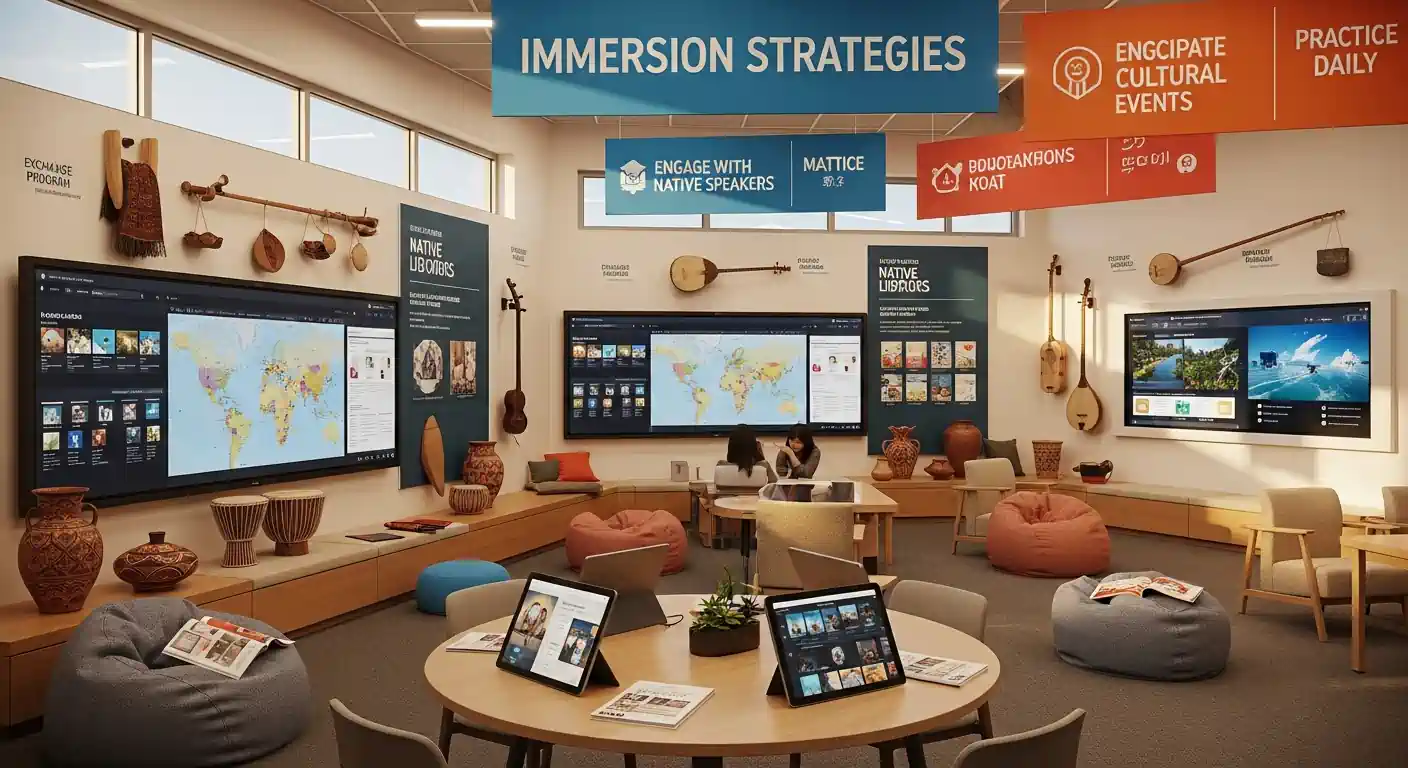
Spanish Vocabulary Building: Proven Strategies for Rapid Acquisition
Embarking on the journey of learning Spanish is an exciting endeavor, and at its heart lies the crucial task of Spanish vocabulary building. A robust vocabulary is the bedrock of effective communication, enabling you to express complex ideas, understand native speakers, and navigate diverse situations with confidence. This article delves into proven strategies designed for rapid acquisition and long-term retention, moving beyond rote memorization to foster a deeper, more intuitive understanding of the language. Whether you're a beginner or looking to accelerate your progress, mastering these techniques will significantly enhance your Spanish vocabulary acquisition and propel you towards fluency.
Key Points for Effective Vocabulary Building:
- Contextual Learning: Integrate new words into meaningful sentences and real-life scenarios.
- Active Recall & Spaced Repetition: Regularly test yourself and review words at increasing intervals to combat the forgetting curve.
- Cognates & Word Families: Leverage similarities with English and learn related words together.
- Immersion & Consistent Practice: Surround yourself with Spanish and make learning a daily habit.
- Personalized Tools: Utilize apps and resources that adapt to your learning style and progress.
Mastering Spanish Vocabulary Acquisition Through Strategic Methods
Achieving fluency in Spanish hinges significantly on your ability to acquire and retain a vast array of words. Spanish vocabulary building isn't just about knowing individual words; it's about understanding their nuances, usage, and how they connect within the language. This section explores a range of effective methods, from leveraging linguistic connections to integrating technology, all designed to make your learning process more efficient and enjoyable. We'll focus on strategies that promote active engagement and deep processing, ensuring that new words stick.
Leveraging Linguistic Connections: Cognates and Word Families
One of the most efficient pathways to rapid Spanish vocabulary acquisition is recognizing the inherent connections between Spanish and English. Both languages share Latin roots, resulting in thousands of cognates – words that look and sound similar and have the same meaning. For example, "information" (English) and "información" (Spanish) are clear cognates. Identifying these can instantly expand your vocabulary.
- False Cognates Awareness: While cognates are helpful, be mindful of false cognates (e.g., "embarrassed" vs. "embarazada" which means pregnant). Learning these exceptions early can prevent misunderstandings.
- Word Families: Once you learn a root word, explore its family. For instance, from "hablar" (to speak), you can derive "hablante" (speaker), "el habla" (speech), and "habilidad" (ability). This approach builds a network of related terms, making retention easier. This method significantly differentiates from basic flashcard approaches by encouraging a holistic understanding of vocabulary.
The Power of Contextual Learning and Immersion
Simply memorizing word lists is often ineffective for long-term retention. To truly master Spanish vocabulary building, words must be learned in context. This means seeing, hearing, and using words in sentences, conversations, and real-world situations.
- Sentence Building: Instead of just "mesa" (table), learn "La mesa es grande" (The table is big). This embeds the word in a grammatical structure and provides immediate usage.
- Reading and Listening: Engage with Spanish media such as books, news articles, podcasts, and TV shows. When you encounter an unfamiliar word, try to infer its meaning from the surrounding text or dialogue before looking it up. This active inference process strengthens memory.
- Real-World Application: Label objects in your home with their Spanish names, practice describing your daily routine in Spanish, or try ordering food in Spanish at a restaurant. Applying vocabulary in practical scenarios is a cornerstone of effective learning.
Harnessing Active Recall and Spaced Repetition Systems (SRS)
The "forgetting curve" illustrates how quickly we forget new information if we don't actively review it. Active recall and spaced repetition are powerful countermeasures. Active recall involves retrieving information from memory without cues, like trying to remember a word's meaning before flipping a flashcard. Spaced repetition systems schedule reviews at optimal, increasing intervals, ensuring you revisit words just before you're about to forget them.
- Flashcard Apps: Digital flashcard apps like Anki or Quizlet are excellent for implementing SRS. They track your learning progress and present words you find difficult more frequently.
- Self-Quizzing: Regularly test yourself. Cover the Spanish word and try to recall the English, then vice-versa. This active engagement is far more effective than passively rereading.
- The Science of Forgetting: Research published in journals like Psychological Science (e.g., a 2024 study on memory consolidation) consistently shows that spaced repetition significantly enhances long-term retention compared to massed practice. This is a key insight for efficient vocabulary acquisition.
Integrating Mnemonics and Visualization for Enhanced Memory
Sometimes, a word just won't stick. This is where mnemonics and visualization techniques come into play. These creative strategies create memorable associations that link new Spanish words to existing knowledge.
- Mnemonic Devices: Create a silly sentence or a vivid image that connects the Spanish word to its English meaning. For example, for "el pato" (the duck), imagine a duck wearing a patch.
- Visualization: When learning a noun, visualize the object. For verbs, imagine performing the action. For adjectives, picture something embodying that quality. The more sensory details you can add to your mental image, the stronger the memory link.
- Storytelling: Weave new vocabulary into short, imaginative stories. The narrative context helps to solidify the words and their meanings.
The Role of Technology and AI in Modern Vocabulary Building
The digital age offers unprecedented tools for Spanish vocabulary building. From comprehensive language learning apps to AI-powered tutors, technology can personalize and accelerate your learning journey.
- Language Learning Apps: Duolingo, Babbel, and Memrise offer structured lessons that introduce new vocabulary in context, often incorporating gamification to keep learners engaged.
- AI-Powered Tutors: Platforms like ChatGPT or specialized AI language assistants can provide personalized practice, generate sentences using specific vocabulary, explain nuances, and even simulate conversations. A recent report by EdTech Insights (2025) highlighted how AI-driven adaptive learning paths are revolutionizing vocabulary acquisition by tailoring content to individual learner needs and progress. This represents a cutting-edge approach to language learning.
- Online Dictionaries and Translators: Use tools like WordReference or DeepL for quick lookups, but always try to understand the word in context rather than just getting a direct translation.
Consistency and Review: The Pillars of Retention
Regardless of the strategies you employ, consistency is paramount for effective Spanish vocabulary acquisition. Short, regular study sessions are far more effective than infrequent, long ones. Make learning a daily habit, even if it's just for 15-20 minutes.
- Daily Exposure: Try to expose yourself to Spanish every day, whether through reading, listening, or speaking. This constant reinforcement helps to embed vocabulary in your long-term memory.
- Regular Review: Schedule dedicated review sessions for older vocabulary. Don't just focus on new words; revisit those you learned weeks or months ago to ensure they remain active.
- Track Your Progress: Keep a vocabulary journal or use an app that tracks your learned words. Seeing your progress can be a powerful motivator.
For more information on this topic, readers can explore related articles on language learning methodologies and effective study habits.
Frequently Asked Questions about Spanish Vocabulary Building
Q1: How many Spanish words do I need to know to be fluent?
A1: Fluency isn't solely about word count, but a strong vocabulary is essential. For conversational fluency, around 2,000-3,000 of the most common words are often sufficient to understand and be understood in everyday situations. To read complex texts or engage in nuanced discussions, you might aim for 5,000-10,000 words or more. The focus should be on acquiring high-frequency words first and then expanding into specialized vocabulary as needed.
Q2: Is it better to learn Spanish words individually or in phrases?
A2: While learning individual words is a starting point, learning words within phrases or sentences is generally more effective. This approach provides context, demonstrates proper usage, and helps you understand grammatical structures naturally. Learning phrases also makes it easier to recall words in conversational settings, as your brain associates them with complete thoughts rather than isolated terms. It's a more holistic approach to Spanish vocabulary acquisition.
Q3: How can I overcome plateaus in my Spanish vocabulary building?
A3: Plateaus are common in language learning. To overcome them, try diversifying your learning methods. If you've been relying heavily on flashcards, switch to extensive reading or listening. Engage in more active conversation, even if it's just with yourself. Focus on learning vocabulary related to a new hobby or interest to reignite your motivation. Sometimes, taking a short break and returning with fresh perspective can also help.
Q4: What's the best way to remember the gender of Spanish nouns?
A4: Remembering noun gender can be challenging. A common strategy is to always learn nouns with their definite article (el/la). For example, don't just learn "mesa," learn "la mesa." Look for patterns: most words ending in -o are masculine, and most ending in -a are feminine, though there are exceptions. Using color-coded flashcards (e.g., blue for masculine, pink for feminine) can also be a helpful visual aid.
Conclusion: Your Path to Accelerated Spanish Vocabulary Building
Spanish vocabulary building is a continuous and rewarding process that underpins your entire language learning journey. By embracing proven strategies such as contextual learning, leveraging cognates, and utilizing the power of active recall and spaced repetition, you can significantly accelerate your Spanish vocabulary acquisition. Remember that consistency, active engagement, and a willingness to explore new learning tools, including cutting-edge AI, are your greatest allies.
Start implementing these strategies today and witness a remarkable improvement in your ability to understand, speak, and truly connect in Spanish. We encourage you to share your favorite vocabulary building tips in the comments below or subscribe for more insights into effective language learning. For further exploration, consider delving into topics like "Advanced Spanish Grammar Techniques" or "Cultural Immersion for Language Learners."
Structured Data Recommendation: This article would benefit from Article structured data. The FAQ section is also suitable for FAQPage structured data to enhance its visibility in search results. Given the practical advice, HowTo structured data could also be considered for specific strategy sections.
Information Timeliness and Update Frequency: This content is evergreen but benefits from updates on new technologies (like AI tools) and recent research in language acquisition. A review and potential update every 12-18 months is recommended to ensure the inclusion of the latest trends and data.
Expandable Related Subtopics for Future Updates:
- **"Leveraging AI for Personalized Spanish Vocabulary Practice"