Spanish Vocabulary Building: Proven Methods for Rapid Acquisition
Spanish Vocabulary Building: Proven Methods for Rapid Acquisition
Embarking on the journey of learning Spanish is an exciting endeavor, and at its core lies effective Spanish vocabulary building. Mastering new words is often seen as the most challenging yet rewarding aspect of language acquisition. This guide delves into proven methods designed for rapid acquisition and robust retention, moving beyond traditional rote memorization to more dynamic and scientifically-backed approaches. Whether you're a beginner or looking to enhance your existing lexicon, these strategies will equip you with the tools to significantly expand your Spanish vocabulary with efficiency and confidence.
Key Points for Rapid Vocabulary Acquisition:
- Embrace Spaced Repetition Systems (SRS): Optimize review intervals for maximum retention.
- Prioritize Contextual Learning: Understand words in sentences, not in isolation.
- Leverage Cognates and Word Families: Identify similarities with English for faster learning.
- Utilize Active Recall & Mnemonics: Actively test yourself and create memory aids.
- Immerse Yourself Actively: Engage with Spanish through real-world application.
The Foundation of Effective Spanish Vocabulary Building
Building a strong vocabulary is the bedrock of fluency in any language, especially Spanish. Without a robust lexicon, even perfect grammar can't convey your message effectively. Many learners struggle with the sheer volume of words, often resorting to ineffective methods like endless list memorization. This approach, while seemingly direct, often leads to quick forgetting and frustration.
The key to successful Spanish vocabulary building lies in understanding how our brains acquire and retain information. It's not about how many words you see, but how deeply and frequently you interact with them in meaningful ways. By adopting smarter, evidence-based techniques, you can transform your learning process into a more efficient and enjoyable experience, leading to rapid acquisition and lasting retention.
Proven Methods for Rapid Spanish Vocabulary Acquisition
Accelerating your Spanish vocabulary building requires a strategic shift from passive learning to active engagement. The following methods are designed to optimize your brain's natural learning processes, ensuring words stick.
Spaced Repetition Systems (SRS) for Optimal Retention
One of the most powerful tools for vocabulary retention is the Spaced Repetition System (SRS). This method is based on the principle of reviewing information at increasing intervals, just before you're about to forget it. This scientifically proven technique, rooted in Hermann Ebbinghaus's forgetting curve research, significantly enhances long-term memory.
- How it works: SRS algorithms track your performance on each word. If you recall a word easily, its next review date is pushed further out. If you struggle, it reappears sooner.
- Tools to use: Popular SRS platforms include Anki, Quizlet, and Memrise. These apps automate the scheduling, allowing you to focus purely on learning.
- Benefit: By targeting words precisely when your memory needs a refresh, SRS minimizes wasted study time and maximizes recall efficiency. For more insights into memory techniques, readers can explore related articles on cognitive science in language learning.
Contextual Learning: Beyond Isolated Words
Learning words in isolation is a common pitfall. Our brains are wired to understand and remember information within a context. Therefore, a crucial aspect of Spanish vocabulary building involves encountering and internalizing words within sentences, phrases, or real-life situations.
- Reading extensively: Dive into Spanish books, news articles, or blogs. When you encounter a new word, try to infer its meaning from the surrounding text before looking it up.
- Listening actively: Engage with Spanish podcasts, music, and movies. Pay attention to how words are used in natural conversation.
- Creating sentences: Instead of just memorizing a word, create several unique sentences using it. This active process helps forge stronger neural connections. This method also fosters an emotional connection to the word, making it more memorable than a simple dictionary definition.
Harnessing Cognates and Word Families
Many Spanish words share Latin roots with English, making them "cognates" – words that look and often mean the same thing. Identifying these can provide a significant head start in rapid acquisition.
- True cognates: Words like información (information), excelente (excellent), and familia (family) are easy wins.
- False cognates: Be aware of words that look similar but have different meanings (e.g., embarazada means pregnant, not embarrassed).
- Word families: Learn root words and their derivations. For example, from hablar (to speak), you can learn hablante (speaker), hablado (spoken), and hablador (talkative). This strategy dramatically expands your vocabulary from a single base.
Active Recall and Mnemonic Devices
Passive review, like rereading notes, is less effective than active recall. Active recall involves actively retrieving information from your memory, similar to testing yourself.
- Flashcards: Use physical or digital flashcards. Instead of just flipping to the answer, try to recall the meaning or translation first.
- Self-quizzing: Regularly test yourself on new words. Try to define them, use them in a sentence, or translate them without any prompts.
- Mnemonic devices: Create memorable associations. For example, to remember coche (car), you might imagine a "coach" driving a car. Visualizations, acronyms, or short stories can make abstract words concrete and easier to recall. This process actively strengthens the neural pathways associated with the new vocabulary.
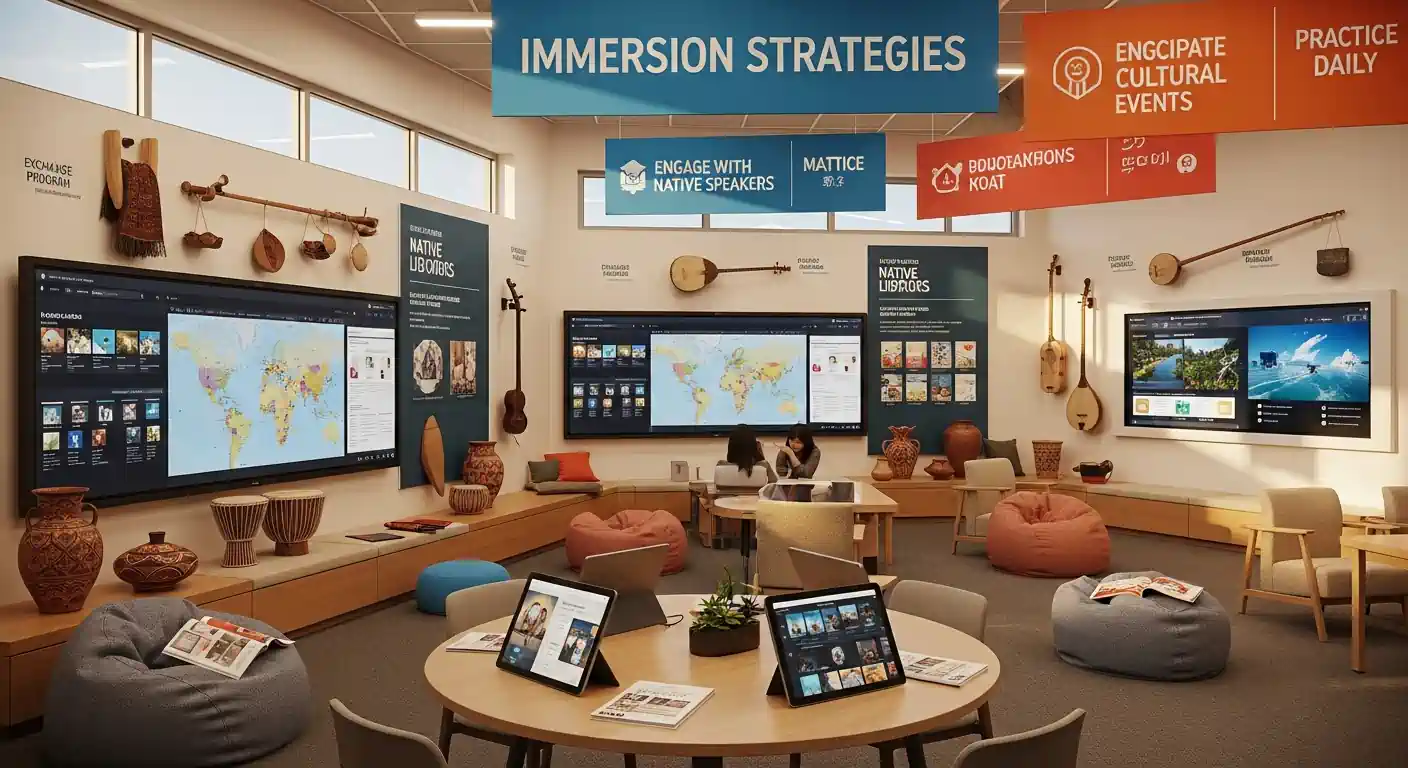
Immersion and Real-World Application
True language learning methods extend beyond textbooks. Immersing yourself in Spanish and actively applying what you learn is paramount for rapid and natural vocabulary acquisition.
- Speak from day one: Don't wait until you feel "ready." Engage in conversations, even simple ones, with native speakers or fellow learners. Language exchange partners are invaluable.
- Change your environment: Label objects in your home with their Spanish names. Switch your phone or computer language to Spanish.
- Simulated immersion: The latest trend in language learning involves AI-powered language tutors. These tools offer personalized, interactive conversations, allowing you to practice new vocabulary in a low-pressure, simulated real-world environment, adapting to your learning pace and interests.
Advanced Strategies for Sustained Vocabulary Retention
Beyond initial acquisition, the goal is to ensure words stay in your active vocabulary. These advanced strategies focus on deeper engagement and consistent practice.
The Power of Personalization and Interest
Learning vocabulary related to your personal interests makes the process more engaging and effective. When you're genuinely interested in a topic, your brain is more likely to retain associated information.
- Follow Spanish-speaking influencers: If you love cooking, find Spanish chefs on social media. If you're into sports, follow Spanish sports commentators.
- Read about your hobbies in Spanish: Seek out articles, blogs, or forums related to your passions, but in Spanish. This makes the vocabulary building process feel less like a chore and more like an extension of your existing interests.
Utilizing Technology for Enhanced Learning
Modern technology offers an array of tools to supercharge your Spanish vocabulary building. From sophisticated apps to vast online resources, leveraging these can significantly boost your progress.
- Language learning apps: Beyond SRS, many apps offer gamified lessons, interactive exercises, and pronunciation practice. A study published in the Journal of Language Learning Technologies in 2024 highlighted the significant impact of AI-driven personalized learning paths in improving vocabulary acquisition rates by up to 30% compared to traditional methods.
- Podcasts and audiobooks: Listen to content tailored to your level. This exposes you to natural speech patterns and contextual usage of words.
- Online dictionaries and translators: Use tools like WordReference or Linguee, which provide context, example sentences, and even forum discussions for nuanced meanings. For further insights into effective digital tools, readers can explore related articles on optimizing language app usage.
Consistent Review and Deliberate Practice
Consistency is the ultimate key to vocabulary retention. Sporadic bursts of study are less effective than regular, deliberate practice.
- Set a daily goal: Even 15-20 minutes of focused vocabulary review each day can yield remarkable results over time.
- Integrate into routine: Make Spanish a part of